The Seven Sages of the Bamboo Grove
Nov 11, 2026The Seven Sages of the Bamboo Grove were a celebrated group of 3rd-century Chinese scholars, poets, and musicians who retreated from the violent political turmoil of the late Cao Wei and early Jin dynasties into a bamboo grove in modern-day Henan province. They were all critics of the newly empowered Confucians. Rather than serving a corrupt and deadly court where political dissent often meant execution, they were icons of intellectual resistance who embraced personal authenticity, artistic freedom, and radical nonconformity.
During the transition from the Cao Wei state to the Sima clan's Jin dynasty, intellectuals faced a lethal dilemma: collaborate with usurpers or risk execution. The Sages chose a third path: internal exile. By gathering in the countryside to drink wine, play the zither, write poetry, and engage in witty philosophical debates known as qingtan (pure conversation), they rejected rigid Confucian social etiquette in favor of naturalness and spontaneity. Their eccentricities, such as going naked indoors, mourning unconventionally, or ignoring high-ranking officials, were deliberate forms of political protest and self-preservation.
Ji Kang: The group's spiritual leader who was also a master guqin player. He had refused office under Sima Zhao and was executed, famously playing his Guangling San calmly right before his death.
Ruan Ji: was renowned for his Poems from My Heart (Yonghuai). He feigned chronic drunkenness to avoid arranged political marriages and fatal court appointments.
Shan Tao: The only Sage who successfully navigated high court office under the Jin dynasty, using his influence to protect the families of his more rebellious peers.
Liu Ling: Immortalized wine in his famous Eulogy on the Virtue of Wine. He was infamous for walking naked in his house, claiming the universe was his dwelling and his rooms were his trousers.
Ruan Xian: The nephew of Ruan Ji and a virtuoso musician. He was so renowned for his mastery of a four-stringed lute that the instrument was named the ruan in his honor.
Xiang Xiu: Co-wrote a major commentary on the Taoist classic Zhuangzi (later completed by Guo Xiang), reshaping Chinese metaphysics for centuries.
Wang Rong: The youngest Sage, who later rose to high office in the Jin court. He was remembered both for his sharp wit and his notorious personal frugality.
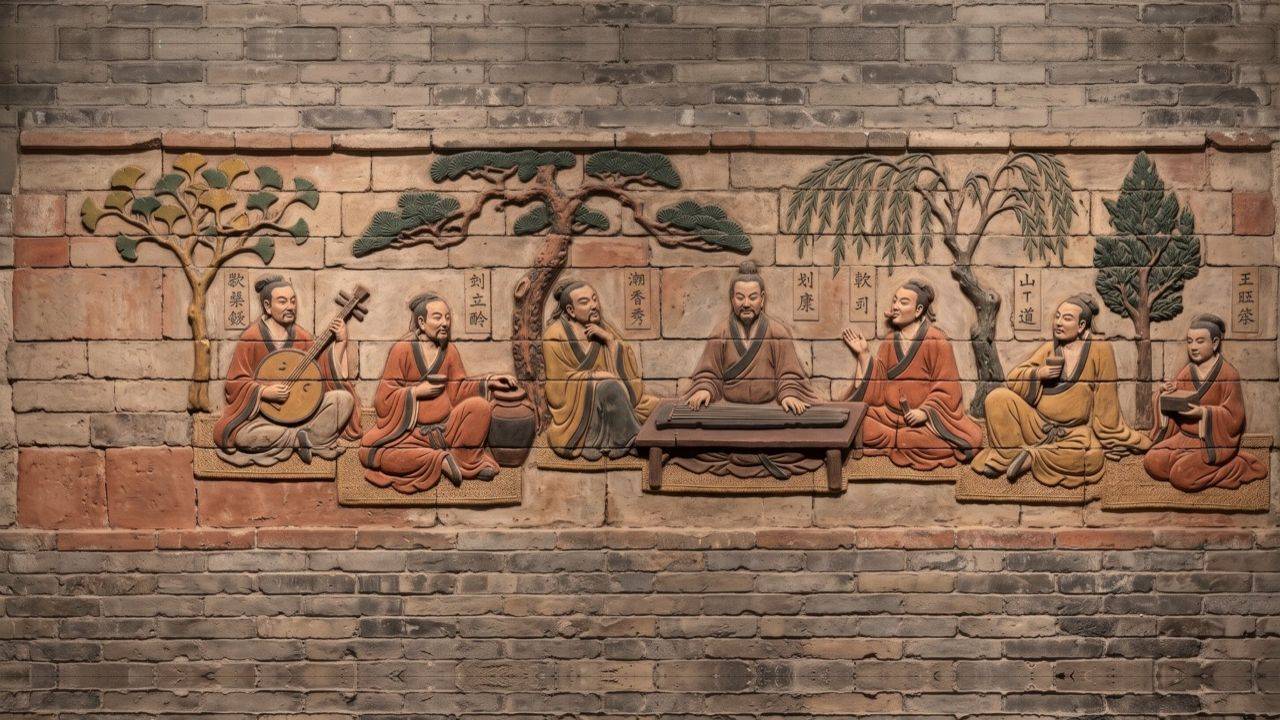
The Seven Sages of the Bamboo Grove became one of the most enduring subjects in East Asian art. Depictions of the seven men conversing among bamboo stalks appear on 4th-century stamped brick tomb murals, Song and Ming dynasty scroll paintings, and Japanese folding screens. They established the cultural prototype for the Chinese literati ideal, demonstrating that withdrawal from public life could be an act of moral integrity rather than cowardice.
Sign up for our mailing list!
Get monthly newsletters, updates, and Taoist cultivation resources delivered to your inbox.
We will never sell your information.
