Guan Gong’s Birthday
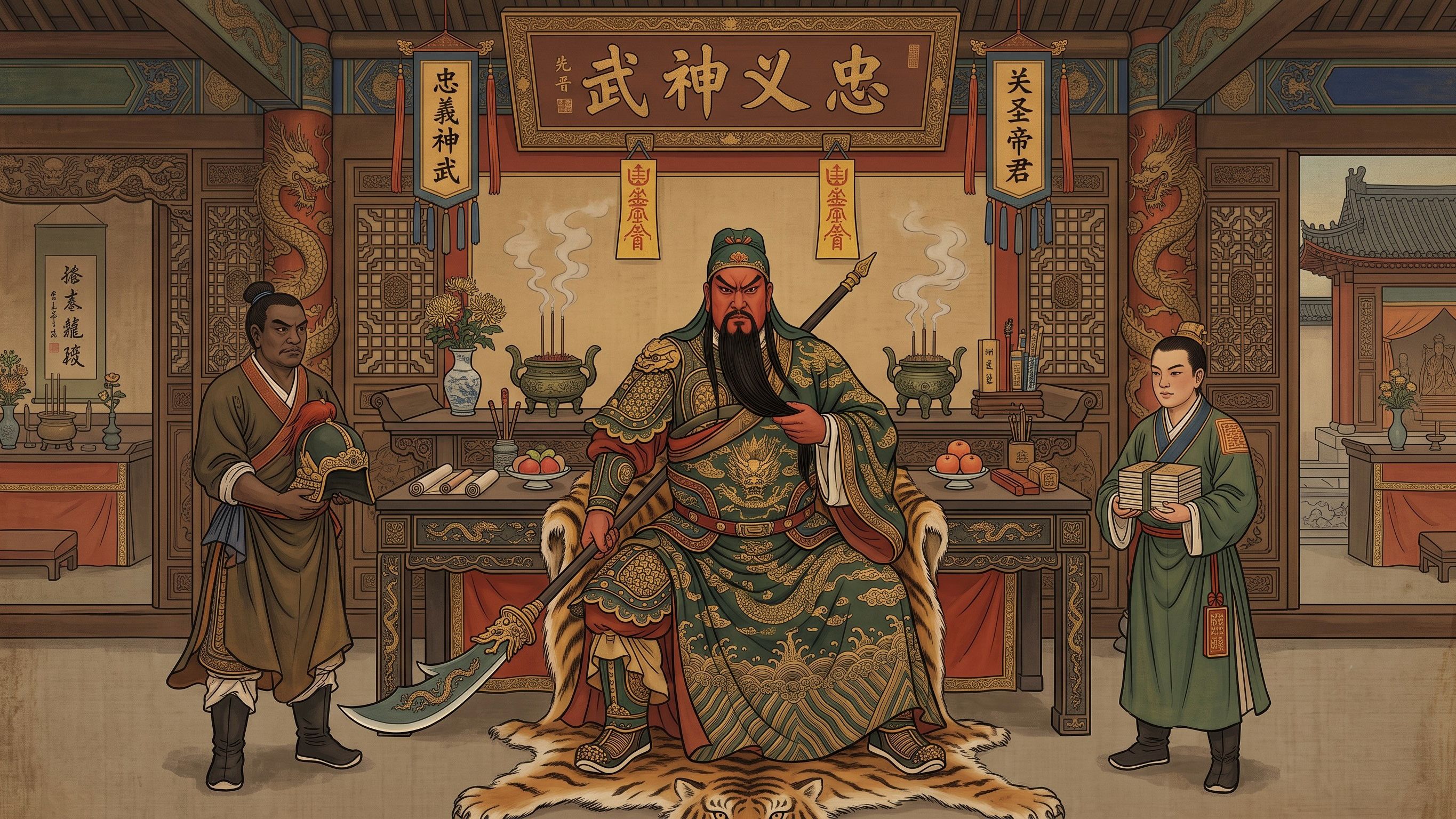
Jul 15, 2026Guan Gong (关公), was originally the Han dynasty general Guan Yu (关羽), and is one of the most fascinating figures in Chinese spiritual history. His journey from a real life military general to a universally revered deity across multiple faiths is incredible. In Taoism, Guan Gong is revered as a powerhouse of protective energy. He embodies “Yi” a concept translated as righteousness, honor, and loyalty. Because he chose death over betraying his oath brothers during the Three Kingdoms period, Taoism deified him as a supreme guardian deity.
Taoists invoke Guan Gong to ward off malevolent spirits, dissolve negative qi, and settle legal or interpersonal disputes. His shrines are prominent in Taoist temples worldwide, symbolizing unwavering moral integrity. Guan Gong is highly celebrated as a God of Wealth. There are five Gods of Wealth, which represent the five directions. Within that, he holds a unique position as the Military God of Wealth (Wu Cai Shen).
Because of his connection to loyalty, honor, and righteousness, businesses display his image to guarantee honest dealings, keep contracts secure, and ward off corrupt partners. Legends credit Guan Gong with inventing the “dayuba,” a specialized double-entry bookkeeping ledger system used by traditional Chinese merchants. While "civil" Gods of Wealth invite prosperity, a "military" God actively defends existing wealth from financial loss, lawsuits, or competitive fraud.
Guan Gong’s transition into Buddhism is a good example of Chinese syncretism (the blending of different beliefs). In Mahayana Buddhist temples, you will almost always find a statue of him holding his iconic weapon, the Green Dragon Crescent Blade, standing opposite Skanda Bodhisattva (Wei Tuo). The Buddhist conversion legend traditionally says that in the 6th century, the soul of Guan Yu appeared in a cloud of grief and anger before the Chan master Zhiyi on Mount Yuquan. Master Zhiyi taught the general's spirit the Dharma, helping him let go of his past violence. Moved by the teachings, Guan Yu took the Buddhist refuges and vowed to become a protector of the faith.
Because of this vow, he was given the title Sangharama Bodhisattva. Sangharama translates to “monastery” or “temple community”. In Buddhism, he serves as the fierce spiritual security guard protecting the temple grounds, the monks, and the Dharma itself. While different traditions view him in their own way; Taoists see a figure of honor and loyalty, Buddhists see a protective Bodhisattva, and business owners see a Guardian of Wealth, the main essence of Guan Gong never changes. He is universally revered because he proves that loyalty, integrity, and honor transcend the boundaries of any single philosophy or religion.
Sign up for our mailing list!
Get monthly newsletters, updates, and Taoist cultivation resources delivered to your inbox.
We will never sell your information.
