When You Stop Pushing and the World Doesn’t: Cultivator Series (Part 6)
Jan 27, 2026Certain issues arise in Taoist cultivation right when things are finally settling. After all the effort to restore Jing (精), regulate Qi (氣), and clarify Shen (神), why does practice begin to look like less doing and more meditation, more stillness, more drifting with the current? And why is it exactly then that the world seems to push back harder?
Some people may question you about what you are doing. They will say that your desire to sit and be calm, which to them seems like doing nothing, is selfish. That retreating from the world is avoidance. They might say you should be more active, more opinionated, more involved, more political, and so on.
Why does this pressure show up just when you finally stop pushing? This is no coincidence, and it isn’t a mistake in practice. It’s a predictable response that occurs when cultivation actually begins to work.
As Jing (body) restores, Qi (breath) settles, and Shen (spirit) clarifies, something happens internally. The Human Heart (人心, Ren Xin) begins to yield, and the Tao Heart (道心, Tao Xin) starts to lead.
In Taoist terms, the Human Heart is shaped by habit, urgency, preference, fear, and the need to manage outcomes. The Tao Heart emerges when those pressures subside and awareness yields to clarity and tranquility.
When this shift begins and your nervous system calms, your sense of urgency fades, overreactions yield, fixation on the self fades, and you stop feeding drama, argument, and friction. From the inside, this feels like finally drifting with the current. From the outside, it can look like disengagement or passivity. But what’s actually happening is that you are no longer providing fuel to chaos. The world and its beings, who rely on constant agitation, notice immediately.
Much of what the world calls engagement—productivity, activism, and outrage—is driven by unsettled Heart Fire (心火). It’s powered by anxiety, unresolved emotion, moral urgency, and nervous system activation.
When Jing is restored and Qi settles, the Heart Fire descends. To people still burning from an unsettled Heart Fire, this feels threatening because you’re no longer operating at the same level.
If People Tell You “There’s More to Life Than Meditation”
Notice who is saying this. It’s rarely someone who has stabilized stillness. It’s almost always someone who:
- cannot rest without guilt
- equates worth with accomplishment
- fears quiet and emptiness
- feels unsafe without constant motion
Your yielding exposes their agitation. And rather than questioning why they cannot stop, they question why you have.
Taoism directly contradicts a culture of force. Civilization is built on pushing, fixing, reacting, correcting, and conquering. The Tao operates through yielding, allowing, ripening, timing, and non-interference.
When Laozi describes the sage as one who acts without forcing and governs by not imposing, he is describing someone whose inner nature is clear and tranquil. That threatens cultures built on taking action and struggling.
A person drifting with the current quietly reveals something uncomfortable: much of our suffering is self-generated. That is not a popular realization.
Why Does the Pressure Increase When You Finally Let Go?
It would seem logical that once you’re settled, the world would leave you alone. But the opposite usually happens.
Before you settle into your lower abdomen and your Tao Heart opens, you are still pushing. You still match the world’s pace. You still leak energy into its games. But when you withdraw from the race, the world can’t accept it.
The collective will needs you to participate, and when you yield that participation, pressure bears down on you. The system may not attack those who fight it (that’s still taking part in the game), but it will always pressure those who stop participating. Your yielding is interpreted as refusal, judgment, superiority, or irresponsibility—even when none of that is present.
Yielding Is Not Bypassing
True spiritual bypassing avoids embodiment. What Taoist cultivation produces is the opposite:
- restored Jing anchors the body
- settled Qi stabilizes emotion
- clarified Shen loosens rigid identity
Yielding here is not avoidance. It is refinement. But to someone living in a world of constant agitation, yielding looks like disengagement simply because it no longer mirrors their inner state.
Taoist Texts Warn Us About This
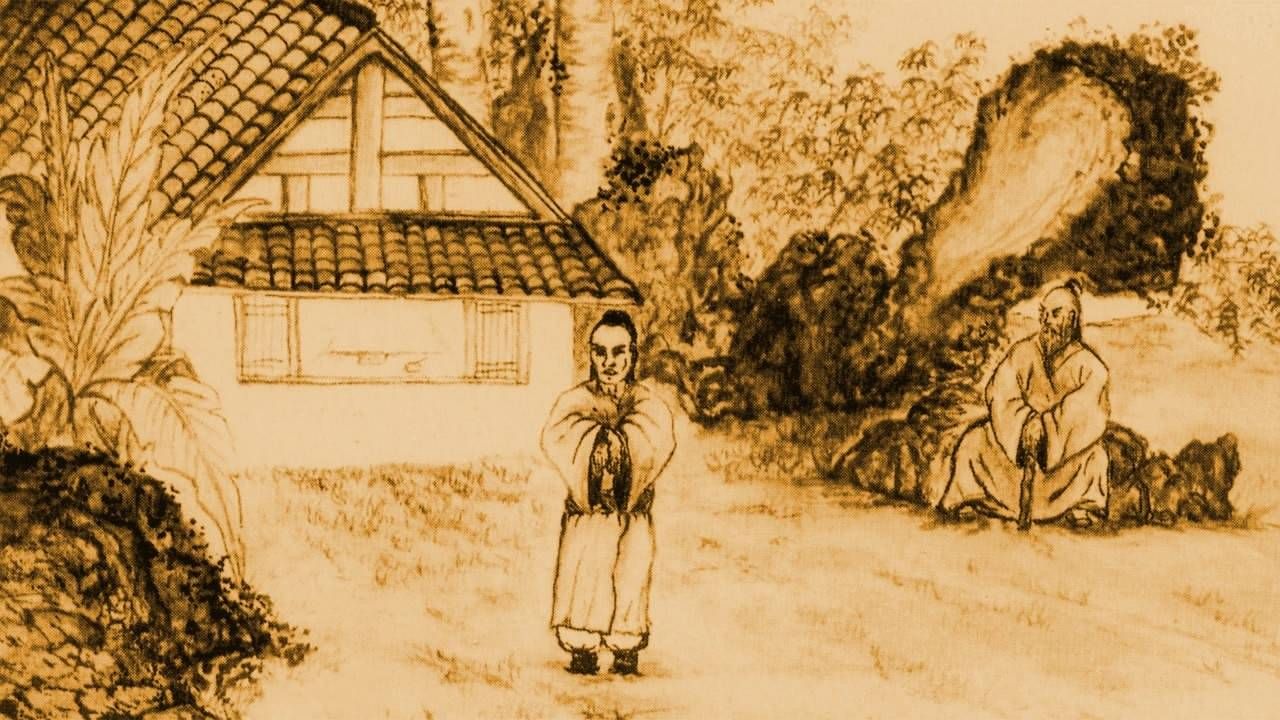
The Zhuangzi is filled with stories of sages who are mocked, dismissed, or considered useless. Trees are spared because they are “good for nothing.” Hermits are ridiculed for not participating.
They survive precisely because they do not compete.
Zhuangzi’s instruction is not to explain yourself—it is to stop arguing with those who cannot hear the current.
Why More Meditation—Not Less—Is Correct Here
After restoration, effort is no longer needed to fix the system.
The work becomes:
- not re-entangling
- not leaking back into noise
- allowing the current to carry you
- letting Shen clarify on its own
This is why meditation deepens, outer action simplifies, and timing becomes primary. This isn’t retreating from life. It’s finally entering it without being distorted.
When someone is finally at ease, it exposes how much of the world is not. And rather than changing themselves, many people try to pull you back into struggle so they don’t have to face that contrast.
That isn’t malice. It’s fear.
The Tao does not need defenders, and it does not need permission.
If Jing is settled, Qi is quiet, and Shen is clear, then yielding is not an escape. It is being naturally-just-so, and this state of being—of clarity and tranquility—always looks suspicious to a world addicted to force.
—Patrick
Sign up for our mailing list!
Get monthly newsletters, updates, and Taoist cultivation resources delivered to your inbox.
We will never sell your information.
